

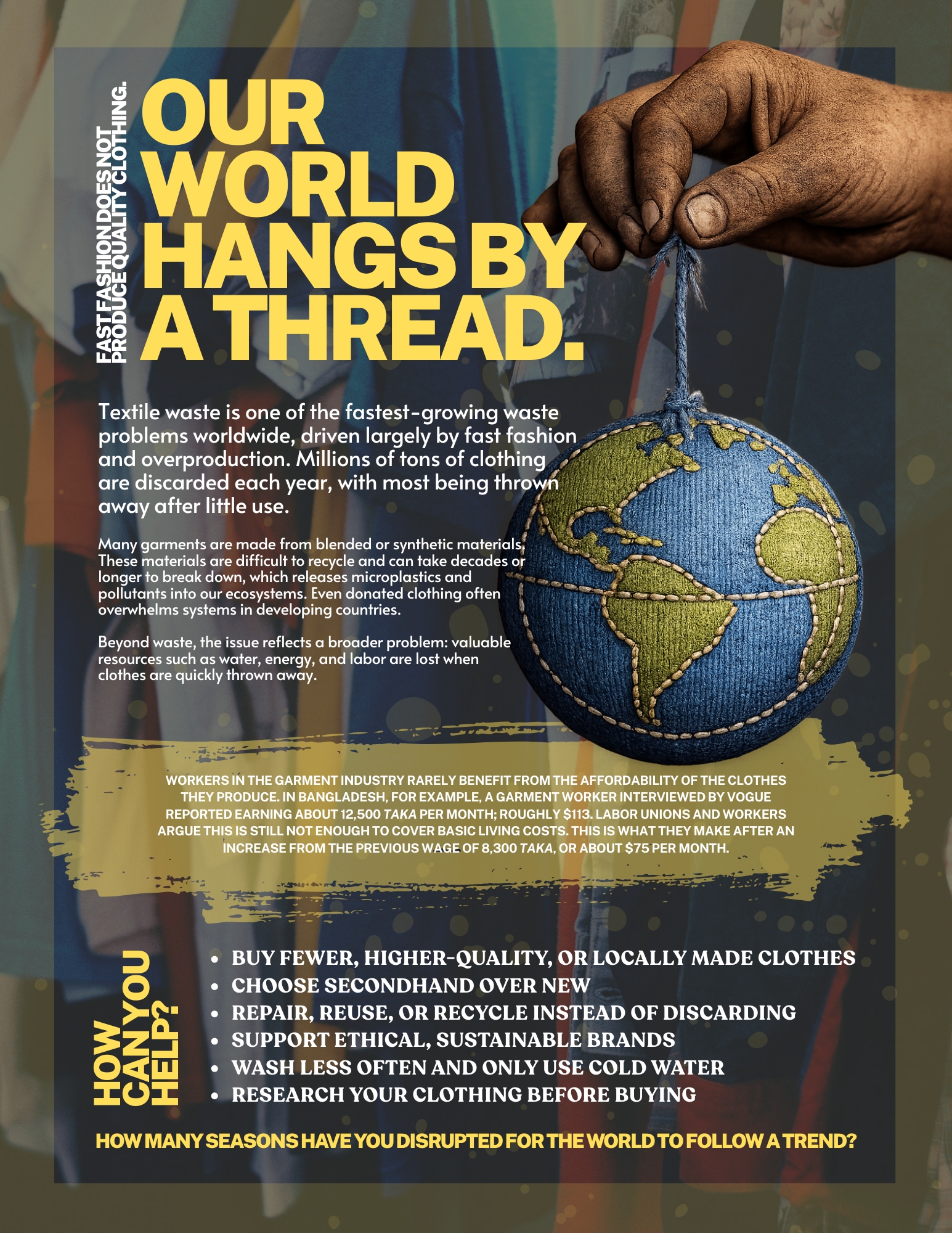
Textile Waste.Our World Hangsby a Thread.
Textile waste is one of the most damaging outcomes of the global fashion industry, affecting workers, the environment, and essential natural resources like water. Behind inexpensive clothing are millions of garment workers, primarily in developing countries, who are often paid extremely low wages; sometimes less than $150 per month. Despite long hours and physically demanding labor, many workers lack basic protections, fair compensation, and safe working conditions. Exposure to harmful chemicals, poor ventilation, and limited labor rights are common, all driven by the demand for fast and cheap production.
The environmental impact of textile waste is equally severe. The production process, especially dyeing and finishing fabrics, releases toxic chemicals into rivers and soil, turning waterways into polluted streams that harm both ecosystems and human health. Synthetic fabrics like polyester shed microplastics that enter oceans, contributing to long-term environmental damage. Additionally, the rapid cycle of fast fashion leads to massive amounts of discarded clothing, much of which ends up in landfills or is burned, releasing further pollutants into the air.
Water usage in the textile industry is another critical concern. Producing garments requires enormous amounts of freshwater, particularly in cotton farming and fabric processing.
For example, a single cotton t-shirt can require around 2,700 liters of water to produce. Denim manufacturing also consumes significant water during washing and finishing processes. In many parts of the world, this level of consumption contributes to water scarcity, depletes natural water sources, and leaves surrounding communities with limited access to clean and safe drinking water.
Together, these issues highlight a system built on overproduction and low cost, where the true price is paid by workers, the environment, and future generations.
View more at Prints.

Related Posts

Ad Campaign Vaping Awareness
This project focuses on developing an…

AWC – What are they saying?
I cannot speak highly enough of our…

Client Spotlight: Chef Alexis Hernández
Alexis Hernández is a passionate and…